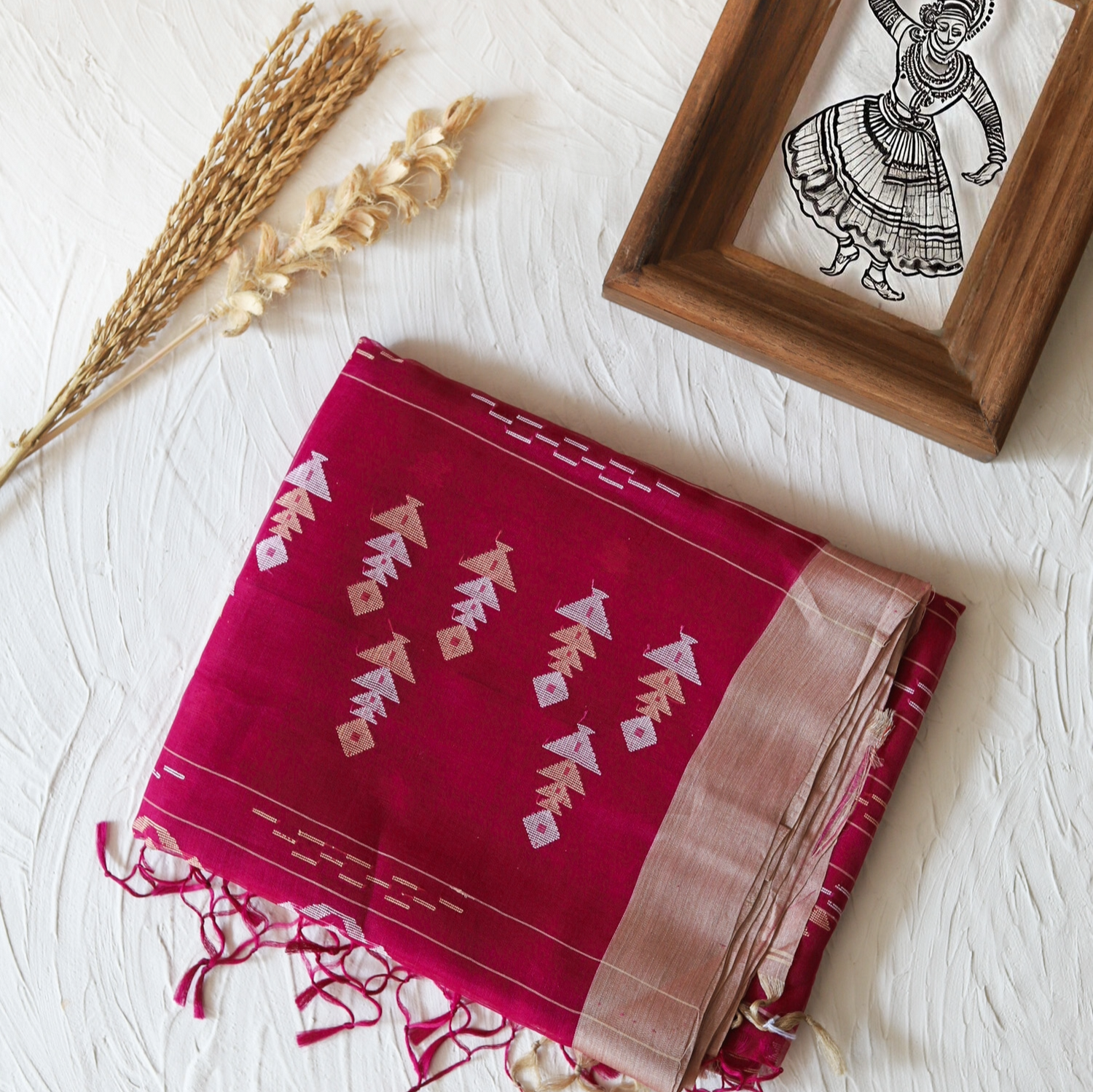
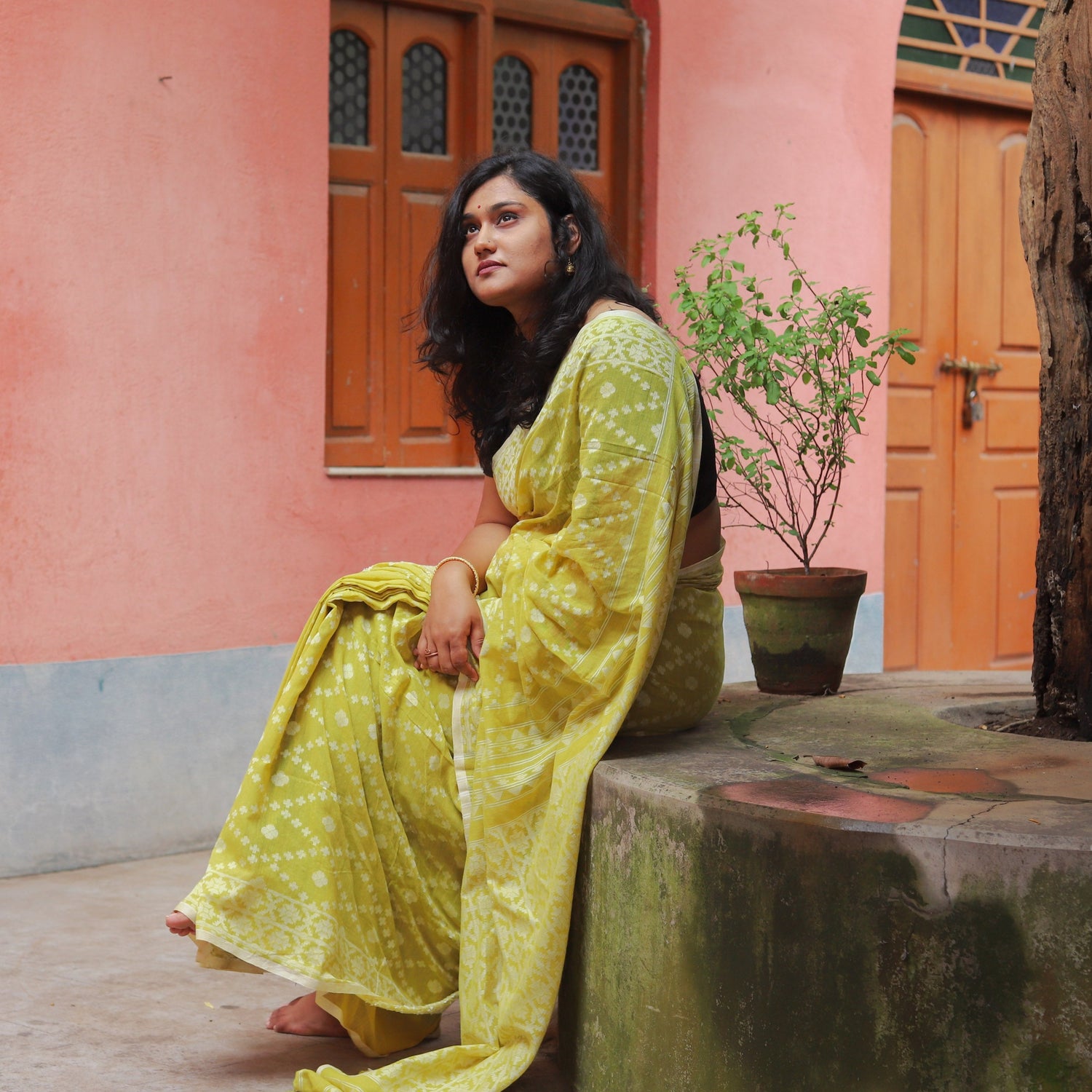
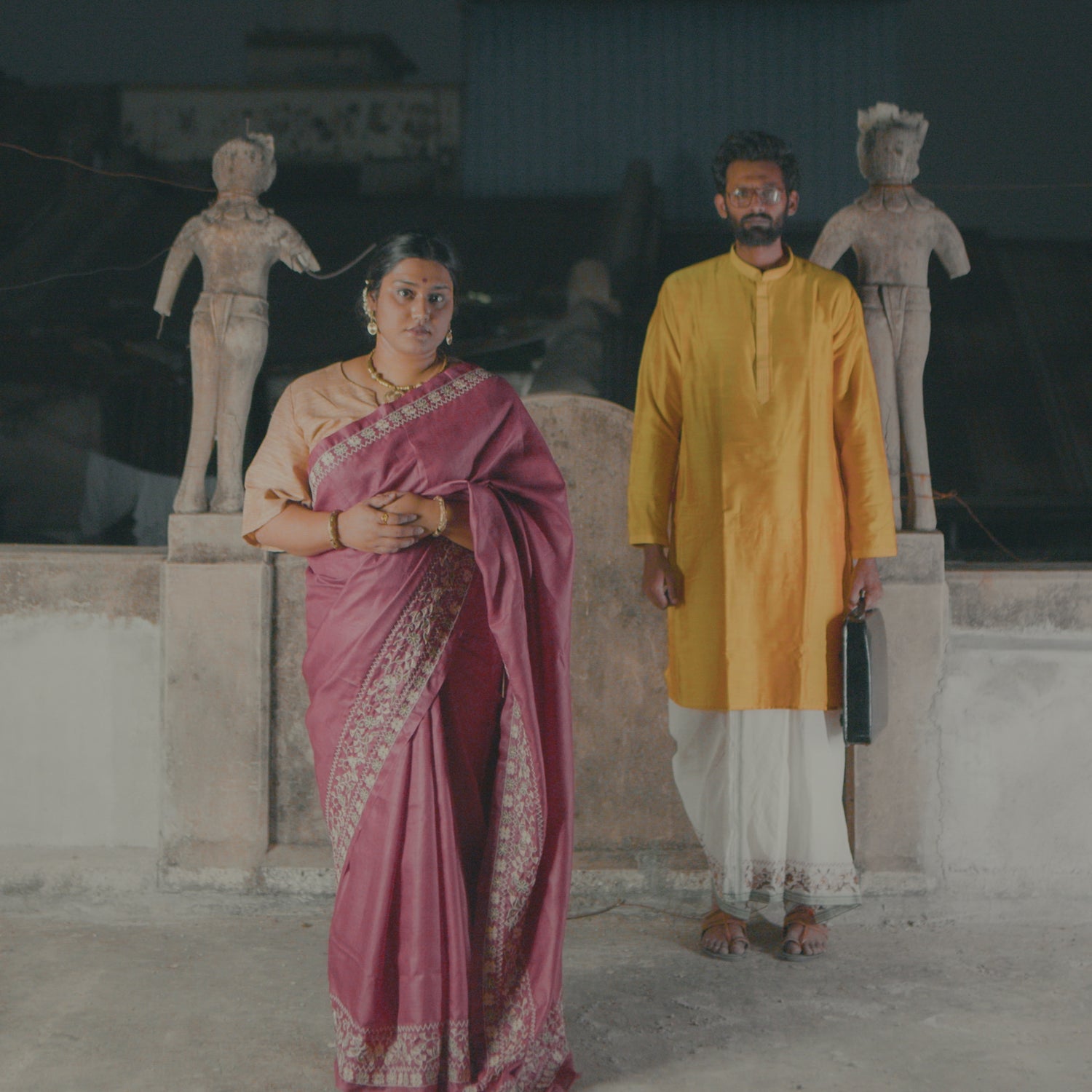
The Korial Saree is a traditional silk textile associated with the historic silk weaving centres of Murshidabad district in West Bengal, a region long known for its mulberry silk production and weaving heritage. The craft forms part of the larger Murshidabad silk tradition, which flourished during the Mughal period when the region emerged as one of the most important centres of silk cultivation, weaving and trade in eastern India.
Korial sarees are typically woven from pure mulberry silk, characterised by their natural off-white or cream body combined with distinctive red borders and motifs. While closely related to the Garad saree, Korial sarees are particularly associated with ceremonial and bridal wear in Bengali culture, where the elegant red border symbolises auspiciousness and celebration. Traditionally, these sarees are worn by brides during wedding rituals and important religious ceremonies.
Murshidabad’s silk tradition developed due to the region’s favourable climate and fertile alluvial soil, which supported the cultivation of mulberry plants used in sericulture. The leaves of the mulberry plant feed the Bombyx mori silkworm, which produces the fine silk filament used in weaving. During the seventeenth and eighteenth centuries, the region especially the historic trading centre of Kasimbazar in Murshidabad became internationally known for its silk, attracting European trading companies including the British, Dutch and French who established trading factories to export silk yarn and textiles to global markets.
The weaving process involves several stages including silk yarn preparation, dyeing of border yarns, warping and handloom weaving using traditional looms.
From the BONGONIKETAN Studio
At BONGONIKETAN, we collaborate closely with weaving clusters and artisan families across the silk belt. Through these partnerships we work directly with skilled weavers and master artisans who preserve the techniques used in crafting traditional textiles of Korial sarees. Our engagement with the craft often begins from the earliest stages of production i.e. sourcing silk yarn, preparing and dyeing the borders, setting the loom and completing the final weaving and finishing processes.
Each textile reflects the patience and precision of handloom weaving, where the creation of a single saree may take 3-4 days or more depending on the intricacy of the border and woven motifs. By working closely with artisan communities and craft villages, BONGONIKETAN seeks to support the continuity of Korial silk weaving traditions while bringing the elegance and cultural depth of Bengal’s handwoven textiles to a wider global audience.
GI Location: Murshidabad District, West Bengal, India
GI Registration Year: 2020
GI Source: Geographical Indications Registry, Intellectual Property India, Government of India