Tangail Sarees of Bengal received Geographical Indication (GI) recognition in 2020. The weaving tradition traces its origins to the historic Tangail region of present-day Bangladesh, where delicate cotton weaving flourished for centuries. Following the partition of Bengal in the mid-twentieth century, many skilled weaving families migrated to India and settled in Phulia in Nadia district, which gradually developed into one of the most significant handloom clusters for Tangail weaving in West Bengal.
Over time, Phulia evolved into a major centre for fine cotton weaving, where artisans continued the techniques and aesthetic traditions of Tangail textiles. While Santipur in Nadia district has historically been known for its own cotton weaving tradition under the Santipore Saree GI, Phulia today plays a prominent role in the production of Tangail-style sarees, with both regions contributing to the broader handloom culture of Nadia.
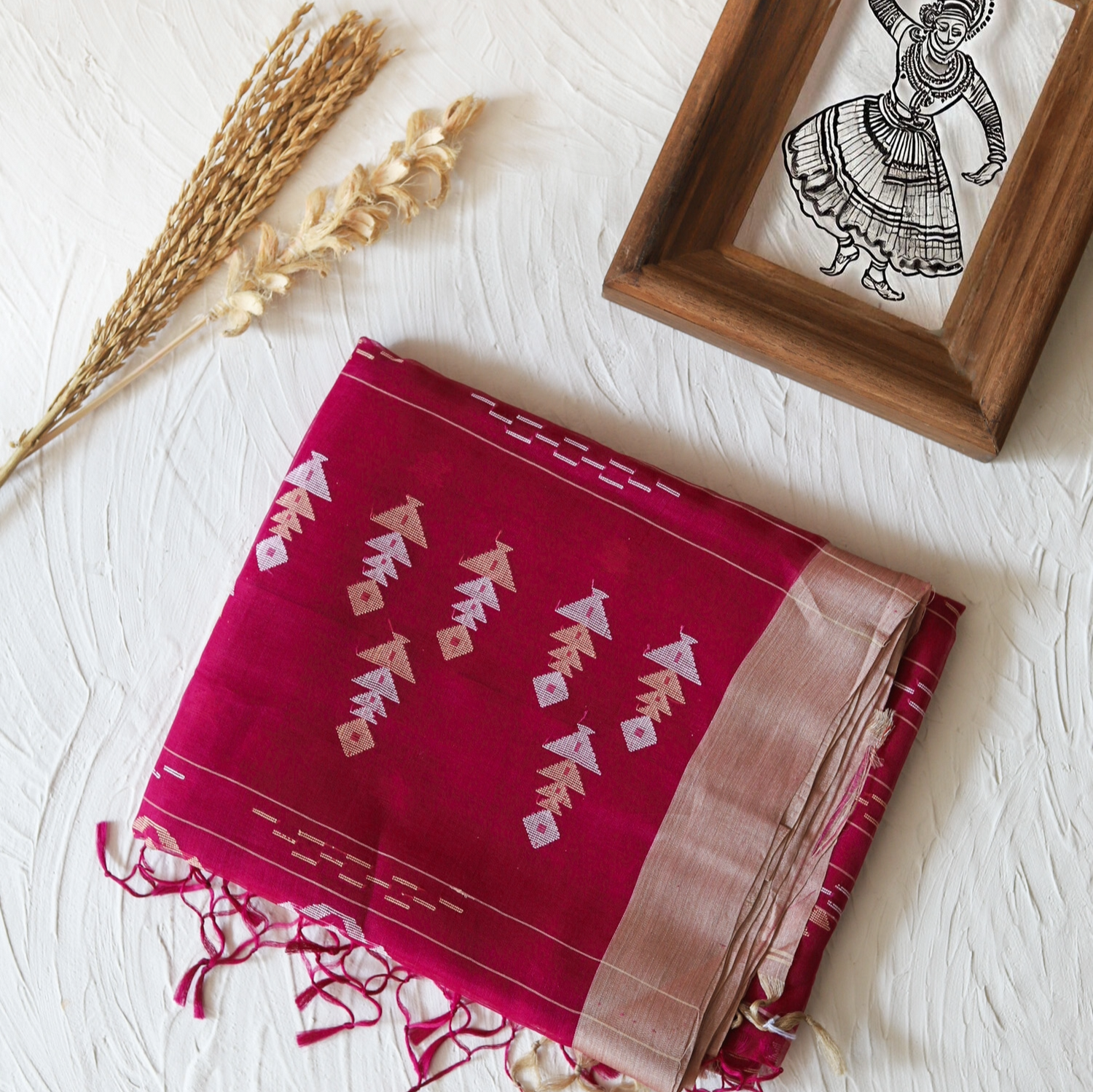
Tangail sarees are known for their fine cotton yarns, lightweight texture and delicately woven motifs. The weaving process involves yarn preparation, dyeing, warping and handloom weaving using traditional pit looms. Characteristic design elements include small butis, elegant borders and intricately patterned pallus. These textiles are highly suited to the humid climate of eastern India and represent one of Bengal’s most refined cotton weaving traditions. Today the weaving communities of Nadia continue to preserve and adapt these techniques through generations of artisanal knowledge.
From the BONGONIKETAN Studio
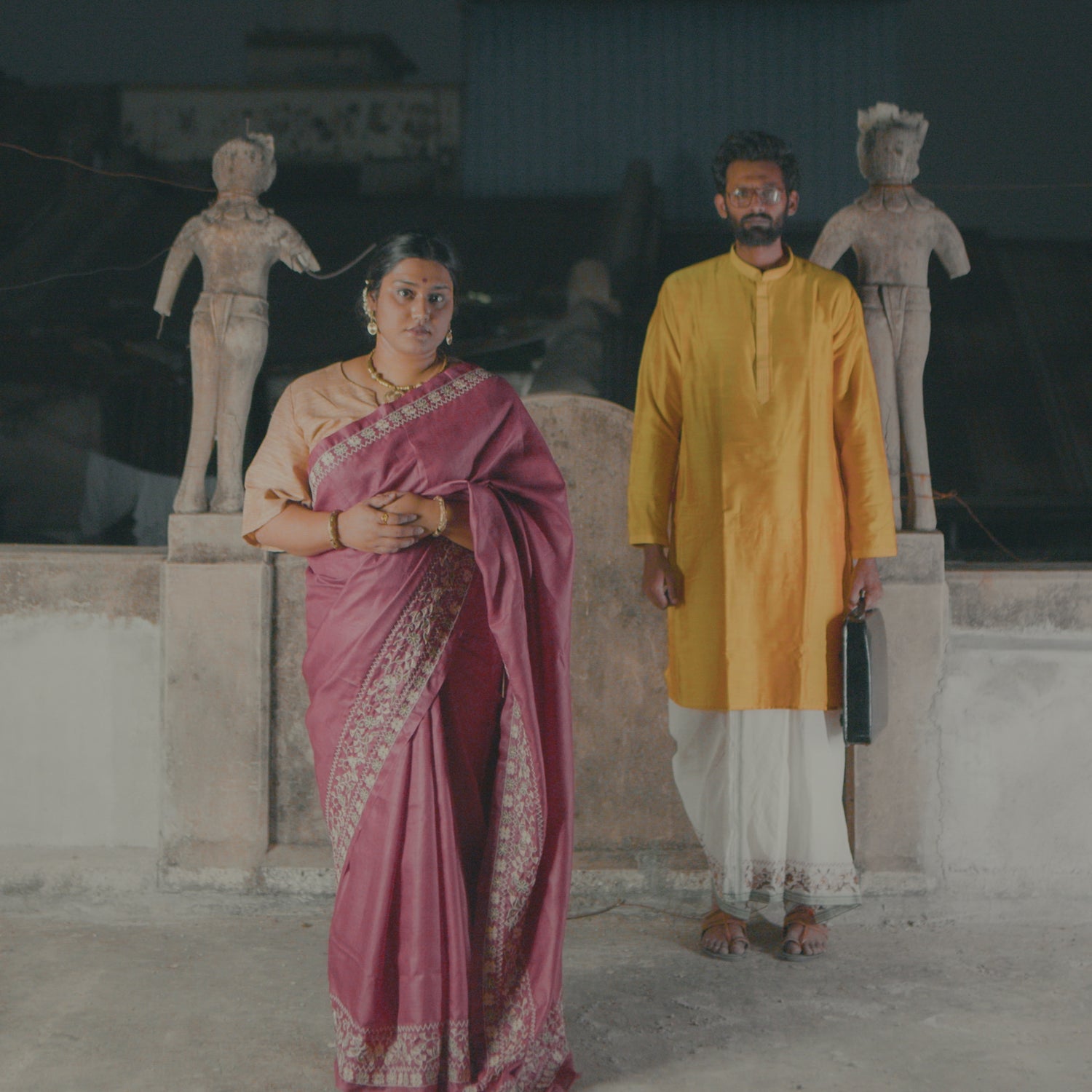
At BONGONIKETAN, we work closely with weaving families, in particular collaborating with seven master artisans including two national award-winning master artisans, along with more than 10 skilled weaving artisans who continue the legacy of Bengal’s fine cotton handloom traditions.
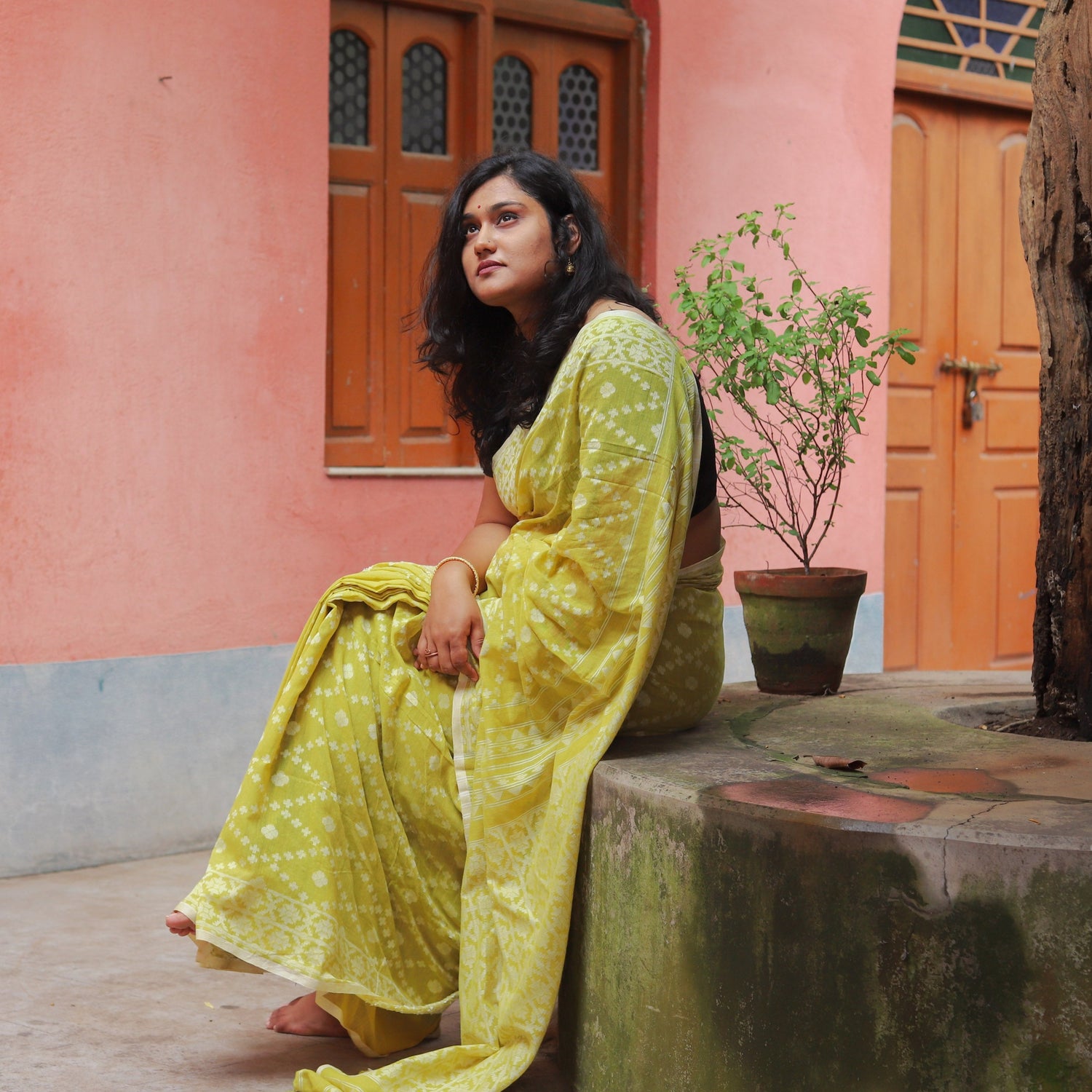
Through these collaborations we develop a wide range of handwoven textiles including pure cotton sarees, suit fabrics, dupattas and other cotton handloom creations inspired by the Tangail weaving tradition.
Our engagement with the craft begins at the very foundation of the weaving process. We work alongside artisans through every stage of production from yarn procurement and spinning to dyeing, weaving and final polishing, ensuring that each textile reflects the authenticity and precision of Bengal’s handloom heritage.
The time required to weave a piece varies depending on the complexity of the design. Simple designs may take about two days to weave, while more intricate patterns can require several weeks or even months of meticulous handloom work. In one remarkable instance, a single saree commissioned by BONGONIKETAN took nearly seven months to be woven by a master artisan, reflecting the patience and dedication embedded in traditional craftsmanship.
Interestingly, this district holds a special place in our journey. We belong from this Nadia region and our connection with handloom weaving goes back generations through stories, traditions and a deep appreciation for the craft. Working with artisans here feels less like business and more like returning to our roots, making this weaving community truly a home setup for BONGONIKETAN.
GI Location: Nadia District, West Bengal, India
GI Registration Year: 2020
GI Source: Geographical Indications Registry, Intellectual Property India, Government of India